
From the train station I rode carefully through the busy wide multi-lane streets of Bucharest to my small cheap $43C a night “Hostel Tripoli” near the old city core. After checking in to the hotel I researched and made a list of top Bucharest attractions in the old city and set out walking to see them.
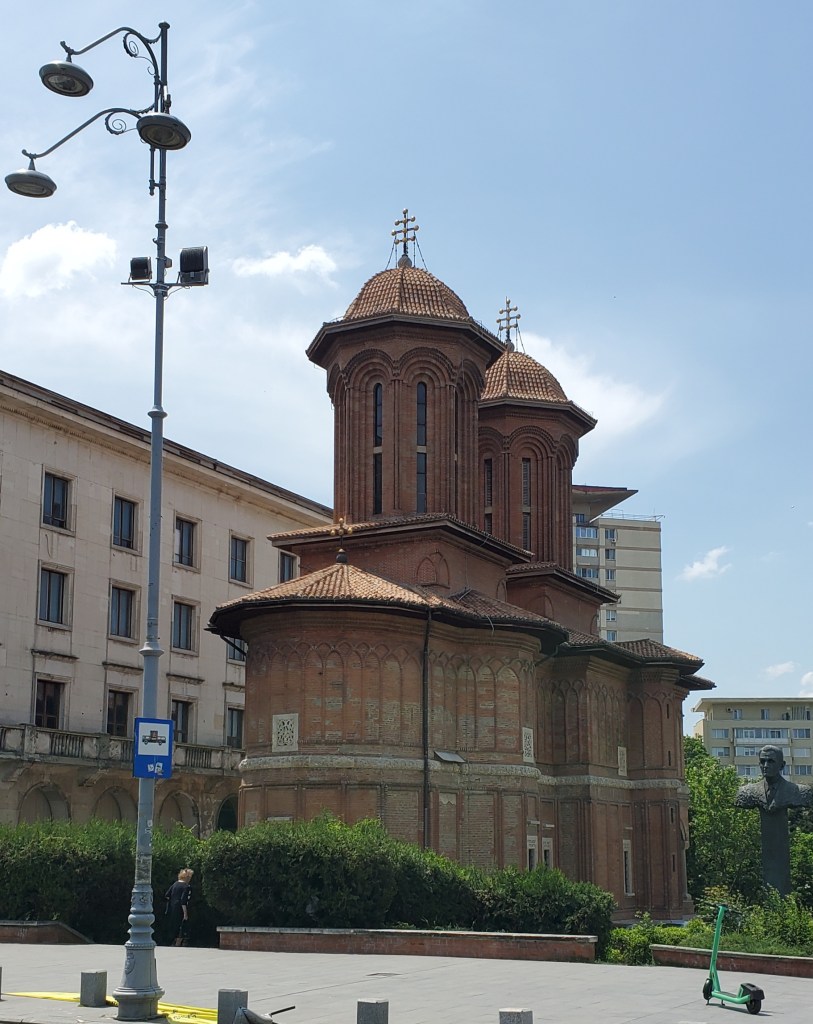
Kretzulescu Church is an Eastern Orthodox church. Built in the Brâncovenesc style, it is located at one of the corners of Revolution Square, next to the former Royal Palace. Has bullet holes in its walls from when Ceausescu’s soldiers fired on the protesting crowd, killing 1,000, and sparking the dictator’s downfall.
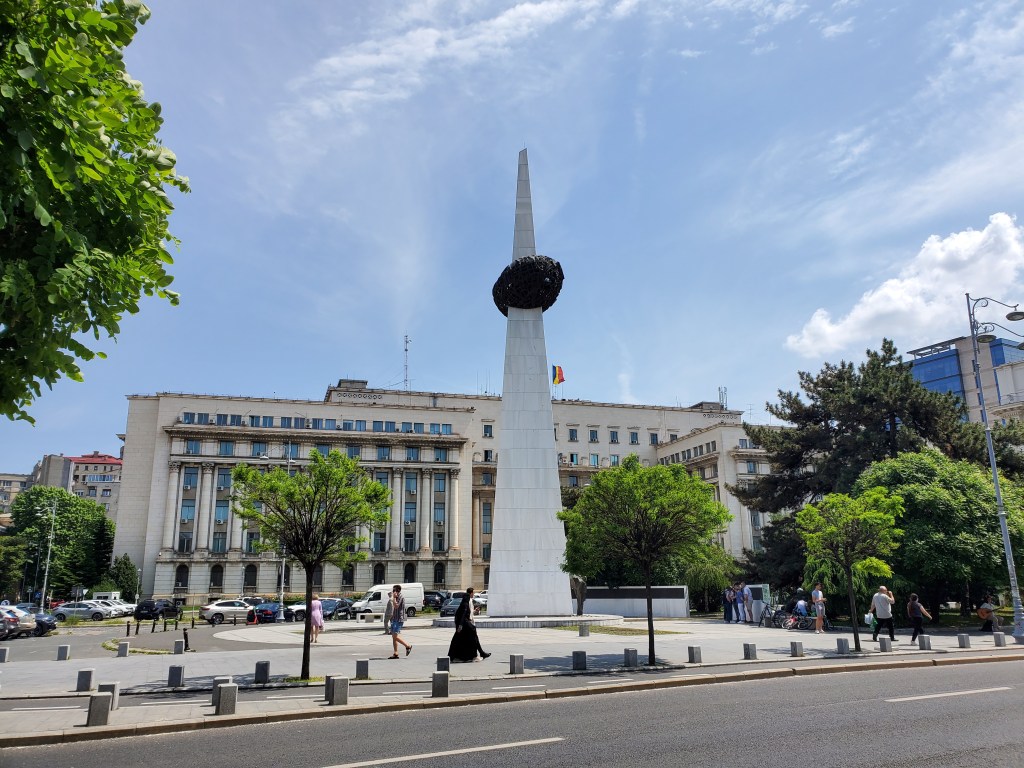
The Memorial of Rebirth commemorates the struggles and victims of the Romanian Revolution of 1989, which overthrew Communism.

Corneliu Coposu (1914 – 1995) was a Romanian politician, the founder of the Christian Democratic National Peasants’ Party, the founder of the Romanian Democratic Convention, and a political detainee during the communist regime.
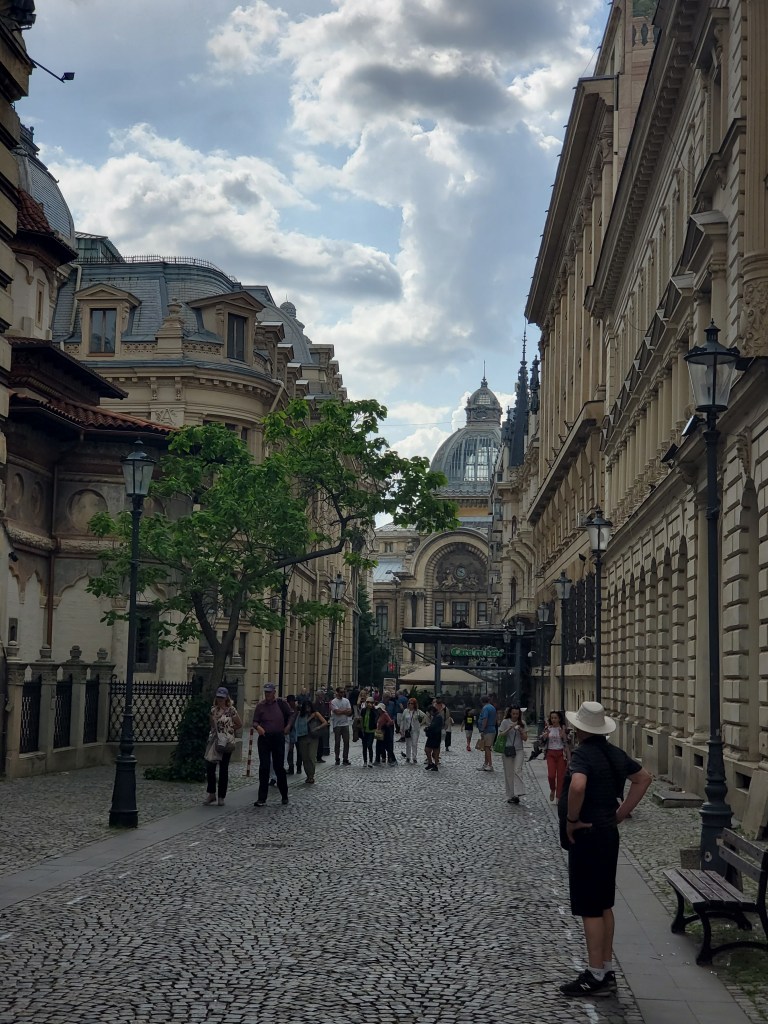

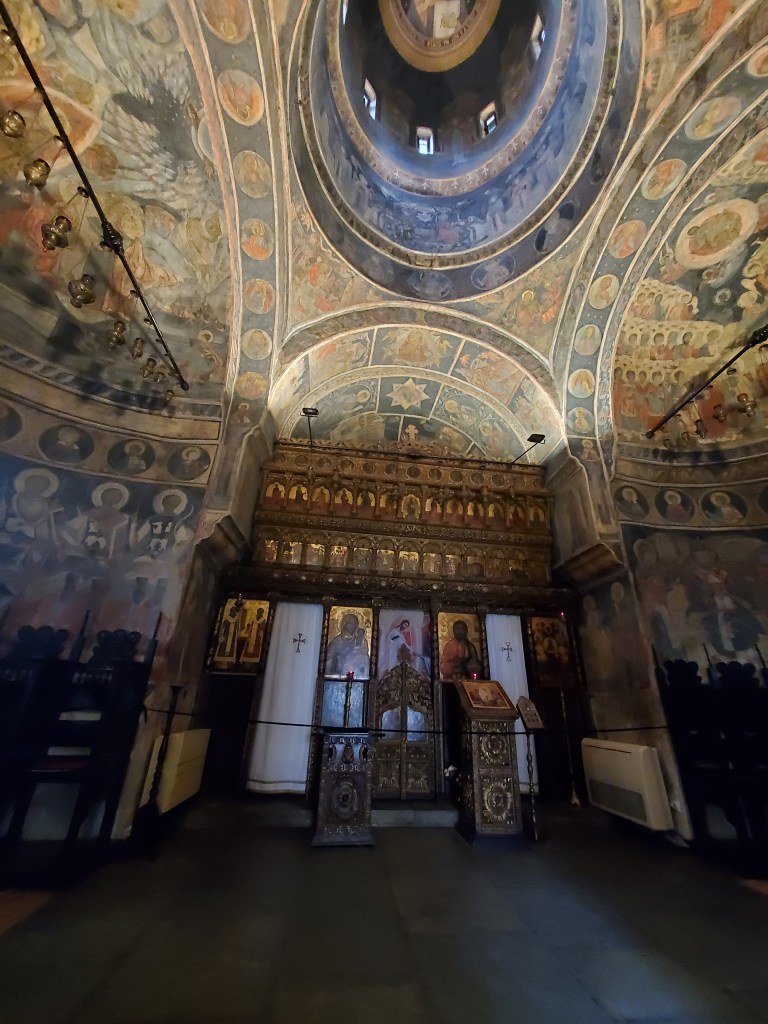
Stavropoleos Monastery Church is an Eastern Orthodox monastery for nuns. Its church is built in Brâncovenesc style. One of the monastery’s constant interests is Byzantine music, expressed through its choir and the largest collection of Byzantine music books in Romania.


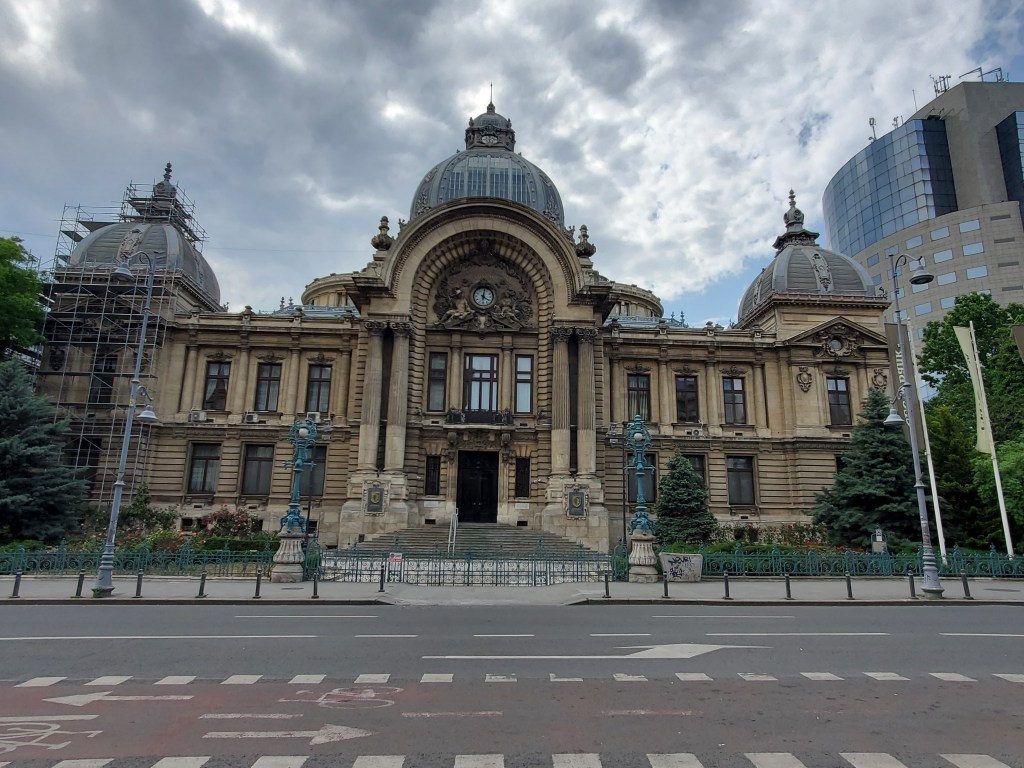
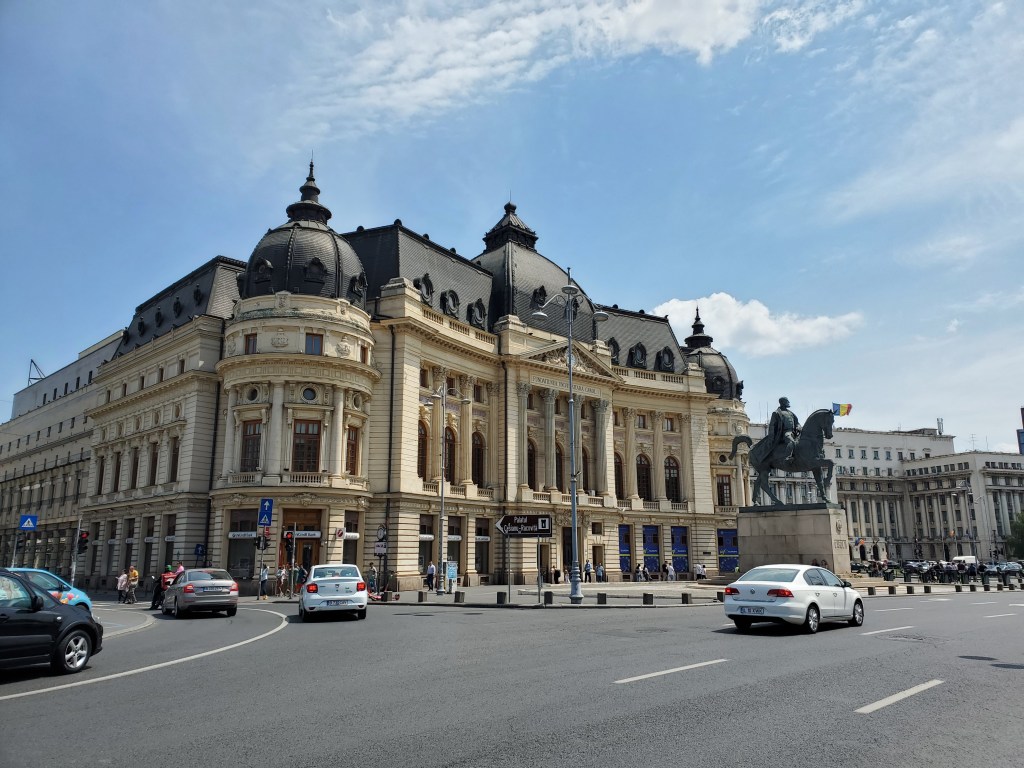
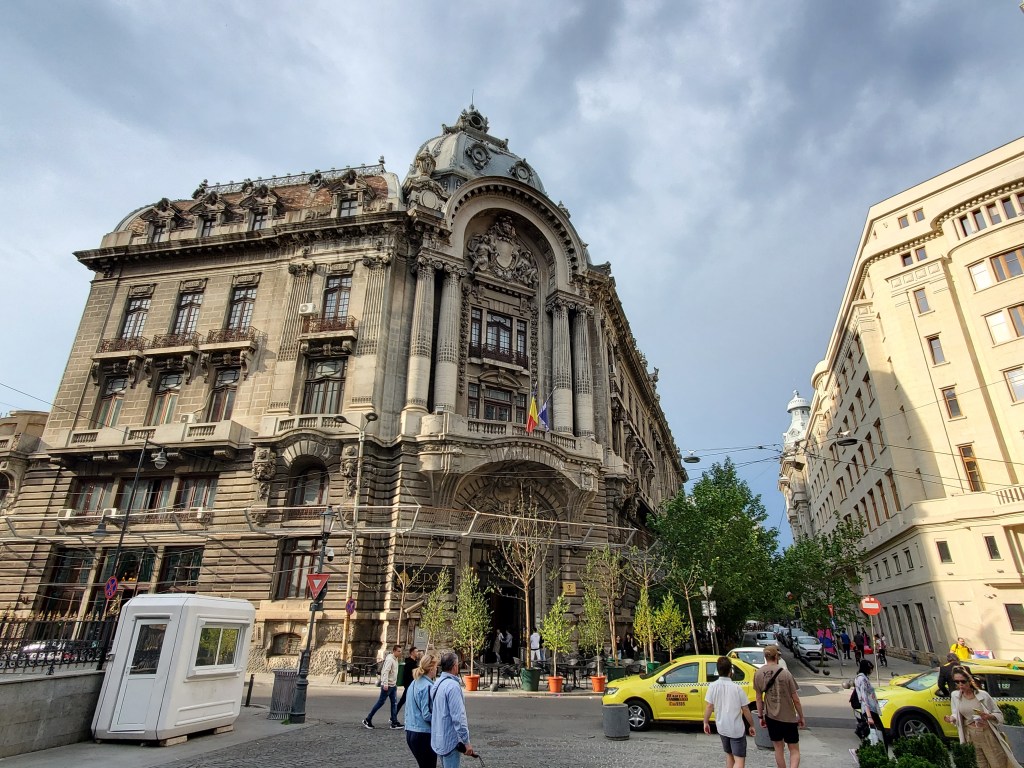
The CEC Palace was built as a new headquarters for Romania’s oldest bank, the public savings institution Casa de Depuneri, Consemnațiuni și Economie, later known as Casa de Economii și Consemnațiuni, and nowadays CEC Bank.

Beaux-Arts syle building

The Palace of the Parliament is the world’s second-largest administrative building (after the Pentagon), an architectural colossus that also claims the title as the heaviest building in the world. Boasting more than 3,000 rooms over 330,000 square meters and constructed with marble and steel, it was originally called the People’s House by its visionary, the dictator Nicolae Ceausescu, who used it as his family’s opulent residence and as the seat of his government. To complete it, Ceausescu razed places of worship, workshops, factories, parks, part of the Old Town, and entire neighborhoods. More than 20,000 workers and 700 architects worked on the opulent Russian Neoclassical-style palace over a span of 13 years, from 1985 to 1997, during which time the majority of Romanians faced poverty.

The Palace of Justice foundation stone was laid by King Carol I of Romania on October 7, 1890. It has 690 rooms with a total area of 33,235 square metres.

The Curtea Veche Church is a Romanian Orthodox church. It is dedicated to, and also known as Saint Anthony Church. It is the oldest church in Bucharest. It existed within the court of Curtea Veche, the court of the Princes of Wallachia.
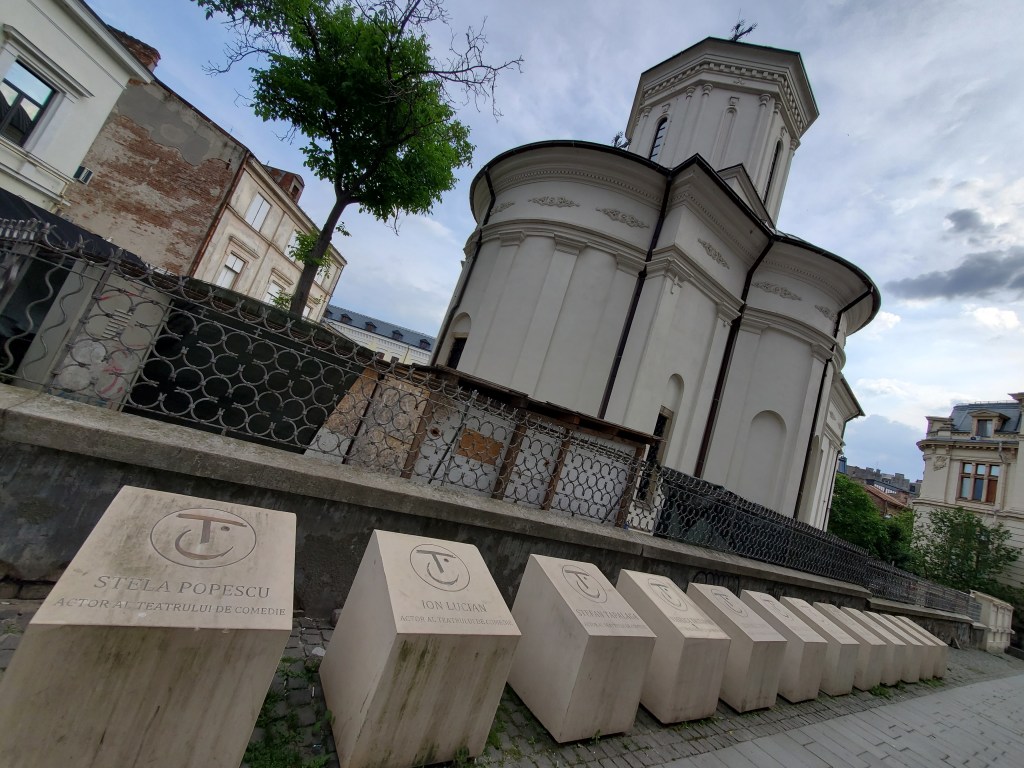
St. Demetrius–Poștă Church is a Romanian Orthodox church. A church has existed on this site since about 1500. The square blocks have names of Romanian comedians?!


The Court of Emperor Nicholas II provided the funds needed for the building (600,000 gold rubles). The seven domes were initially covered in gold. The icons was carved in wood and then covered in gold, following the model of Church of the Twelve Apostles in the Moscow Kremlin. Initially Russian Orthodox it is now Romanian Othordox.
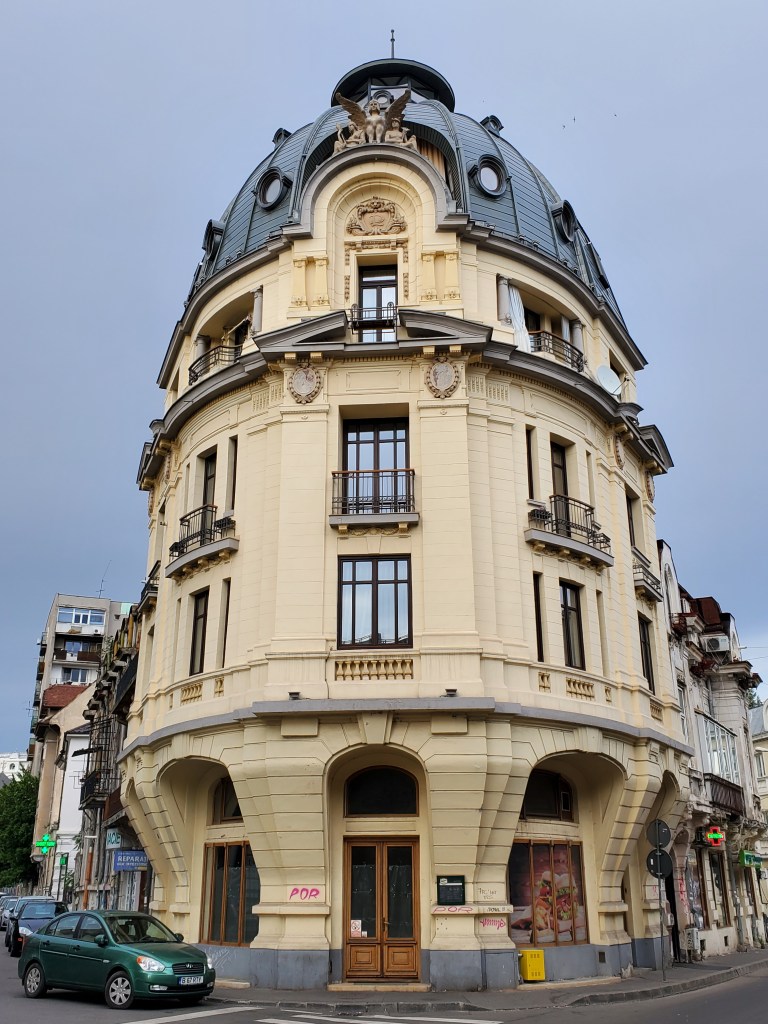

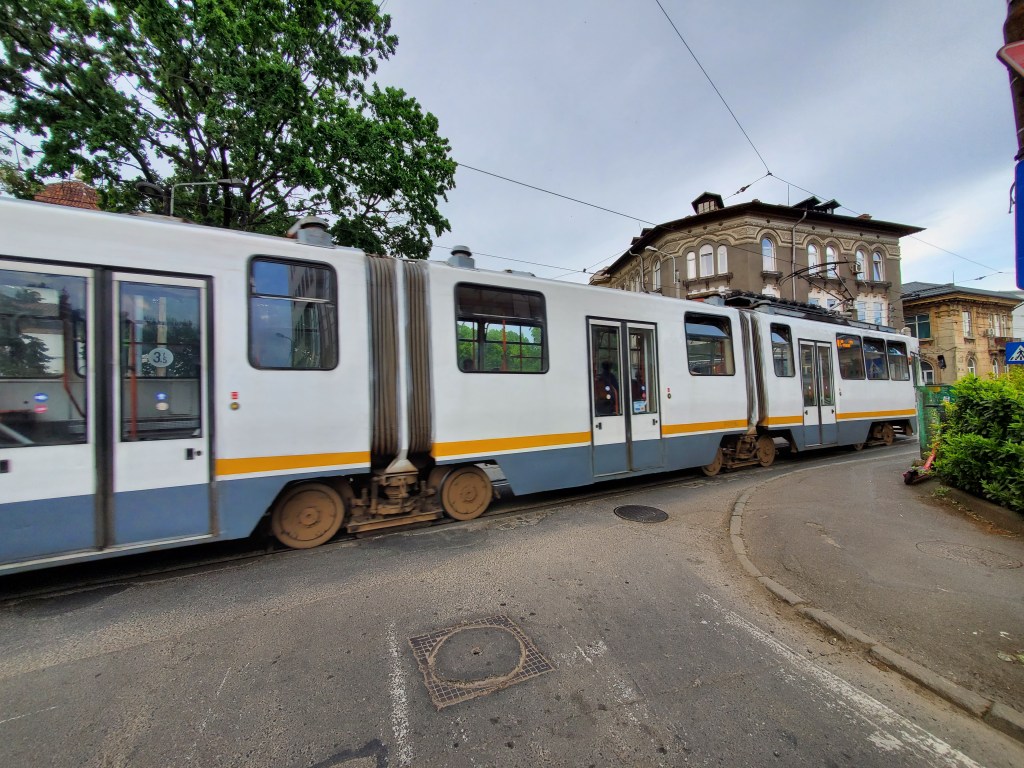
Bucharest certainly is a very fascinating city to visit.
Cheers…Greg
#bucharest, #romania, #gregbikingwithoutborders
Discover more from GregRidingWithoutBorders
Subscribe to get the latest posts sent to your email.

 GregRidingWithoutBorders